
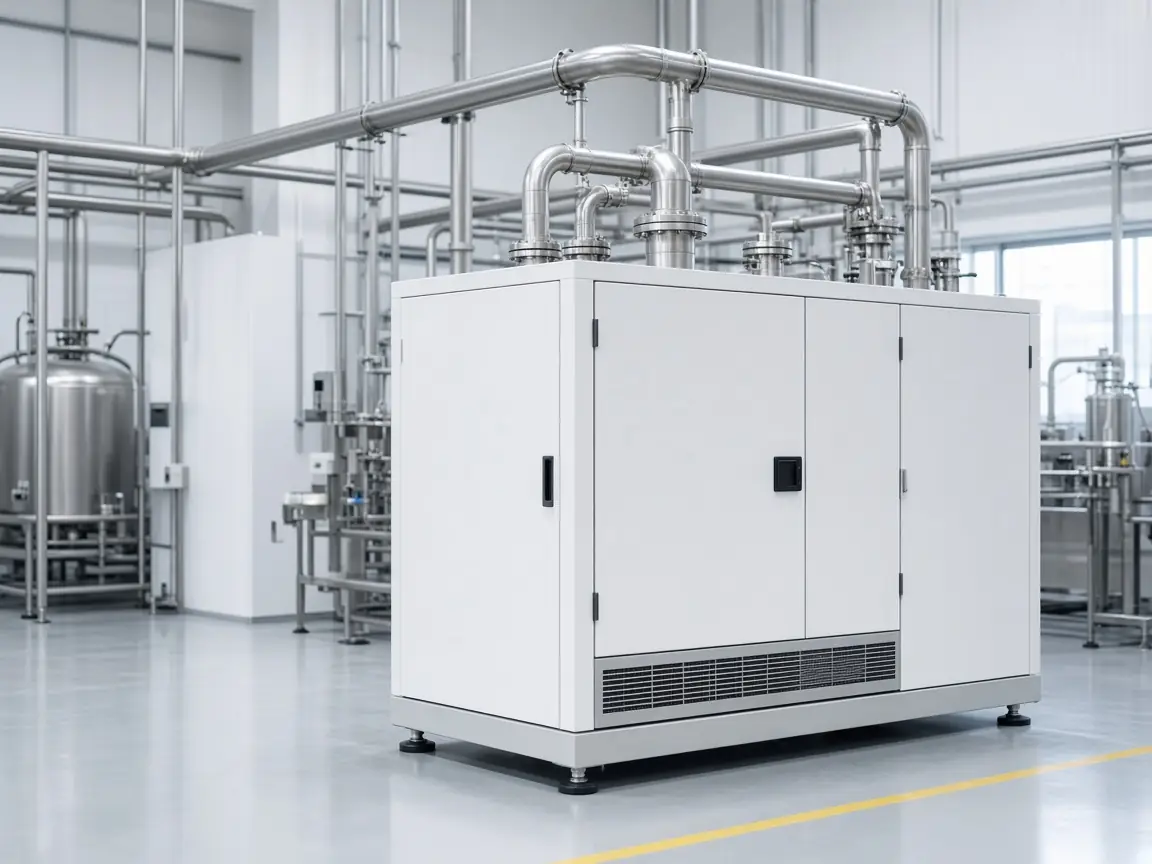
Oil-free airends are the starting point, not the certificate. ISO 8573-1 classifies compressed air by particles, water and oil. “Class 0” is stricter than Class 1 only against a test method the plant names. A canopy sticker is not that method.
This note is written by CompressorB2B, the specification desk. We publish Chinese plants that can build oil-free screw, scroll or dry packages. We do not write a Class 0 report for them.
What belongs on the duty sheet
A food, beverage or pharma RFQ should state:
- ISO 8573-1 class for oil, water and particles separately if you care
- whether the test point is the package outlet or after the dryer / sterile filter
- dryer type (refrigerant / desiccant) and sterile-housing filter if the line needs it
- remaining oil as mg/m³ if the plant quotes a number
- 50 / 60 Hz, voltage, ambient and washdown if the room is wet
If any of those are missing, two factories will quote two different machines and both will be “right”.
Oil-free is not automatically Class 0
A dry screw or oil-free scroll removes the injection oil. Downstream piping, a wet receiver or a poorly specified filter can put aerosol back in. Class 0, when it is real, is a system claim: airend + treatment + a lab method (often ISO 8573-2 / -3 / -4 as referenced by the plant).
Chinese plants on this desk can build Class 0 packages. Documents belong on the catalog row. If a paper is missing, the row says missing.
How we treat certificates
- ISO 9001 on the works is not ISO 8573-1 on the air
- CE on the package is not Class 0
- A PDF of another machine’s test is not your machine’s test
Ask for the test report number, the method, and the sample point. Put those on the RFQ. Issue the duty sheet.
This note is a specification desk file. Certificates and quotes come from the manufacturing plant. Missing papers stay missing.