
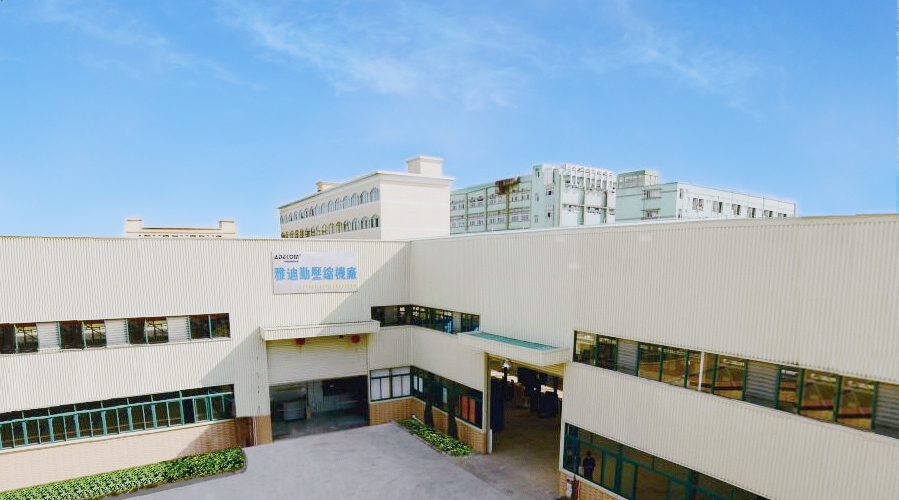
东莞雅迪勤压缩机制造有限公司 · Shatian, Dongguan
Compression and system engineering for three different production duties
ADEKOM supplies industrial air, oil-free air and engineered gas equipment. Its corporate profile describes compression, purification and boosting alongside integrated system engineering. A PET blowing cycle, clean process air and a biogas inlet each require their own selection basis.
The factory identity is Dongguan Adekom Compressor. Current corporate materials also use ADEKOM New Energy Equipment & Engineering Limited. Put the actual legal seller, manufacturer and test location on the purchase documents.
The industry organiser’s previous-exhibitor directory lists 东莞雅迪勤压缩机制造有限公司 / ADEKOM KOMPRESSOREN (DONGGUAN) LIMITED. This corroborates the manufacturing identity; a project’s model and acceptance documents still need their own scope.
How the application range developed
- 2004: first screw compressor production in the company history.
- 2008: customised-product development department.
- 2010–2011: natural-gas and biogas system development.
- 2012–2017: dry oil-free air and tandem high-pressure packages.
- 2018–2023: containerised stations, CO₂ screw and medium-pressure oil-free developments.
PET bottle blowing · KSP-OF
Size the air supply around the blow cycle and its utilities
The water-lubricated screw stage plus oil-free piston booster combines two compression technologies in one KSP-OF package. The listed normal-volume capacity and cooling-water demand give a starting point for a bottle-blowing enquiry.
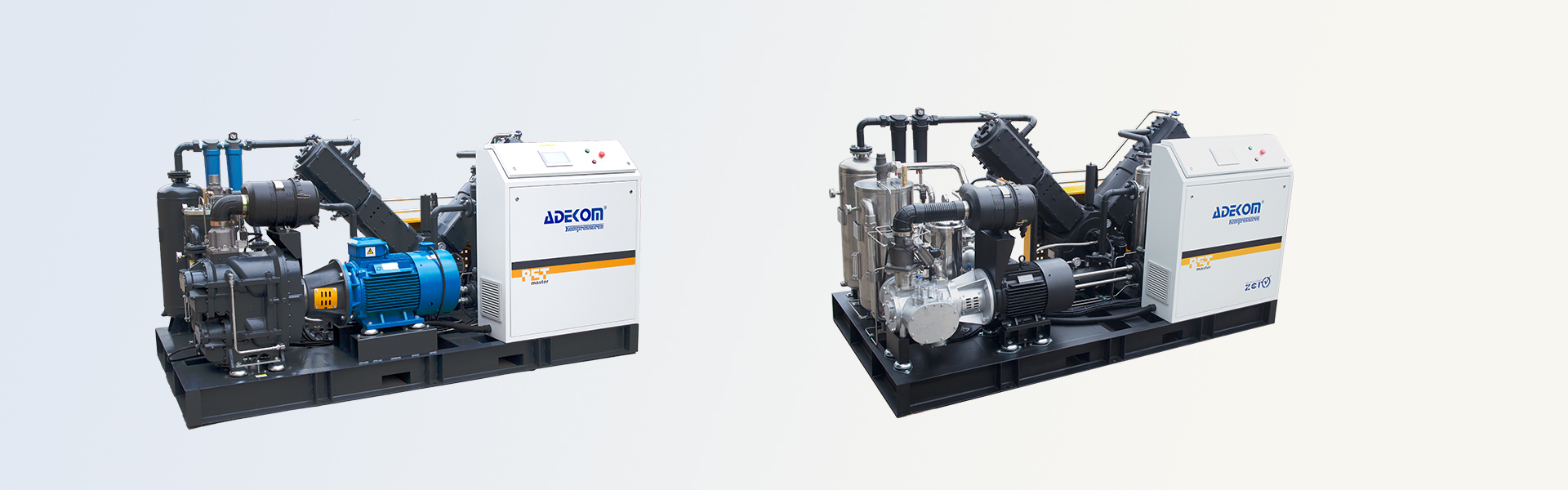
KSP-OF6/40PM
- Normal-volume air capacity
- 6.0 Nm³/min · 40 barg
- Installed power
- 67 kW
- Cooling-water flow
- 20 t/h
- Outline · L × W × H
- 3000 × 1550 × 1650 mm
- Package weight
- 2800 kg
KSP-OF8/40PM
- Normal-volume air capacity
- 8.0 Nm³/min · 40 barg
- Installed power
- 85 kW
- Cooling-water flow
- 24 t/h
- Outline · L × W × H
- 3000 × 1550 × 1650 mm
- Package weight
- 3100 kg
Send the production demand
Provide blow-moulder consumption, peak and average flow, cycle timing, machine inlet pressure and planned receiver volume. Account for simultaneous lines and pressure recovery between cycles.
Resolve the installation boundary
Agree water temperature, pressure, quality and heat rejection. Itemise high-pressure dryer, receiver, filtration, safety equipment, drains, controls and pipework, with air-quality criteria at the blow-moulder.
KDS dry oil-free · Pressure-specific selection
Compare clean air at the required delivery pressure
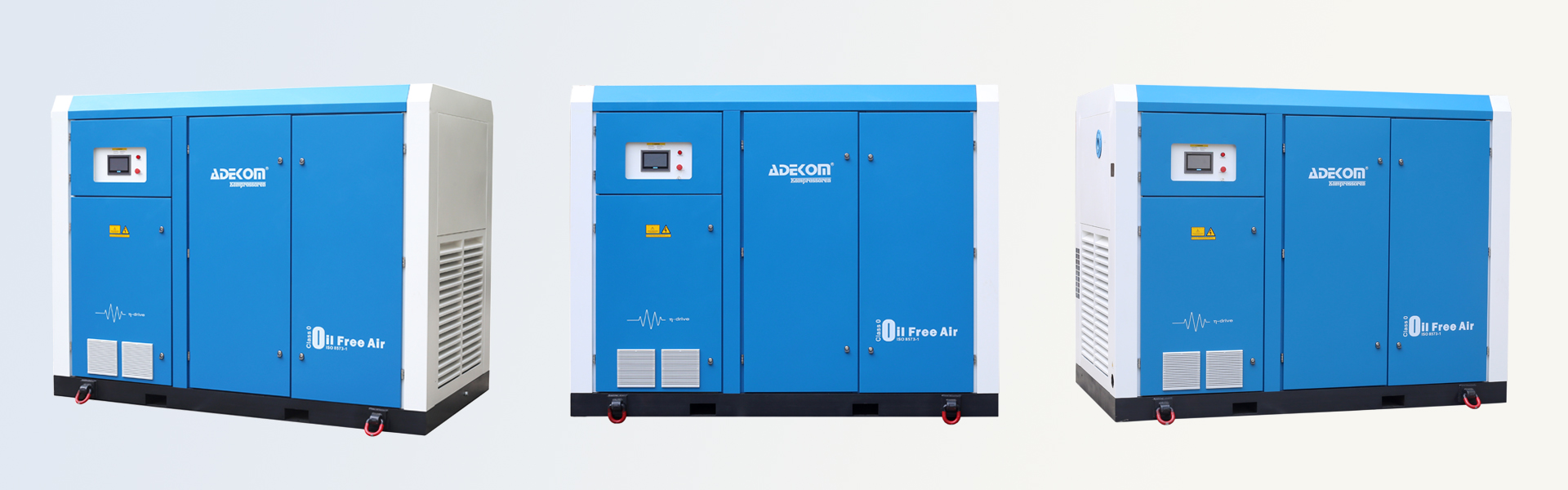
Standard KDS75 · 75 kW main motor
| Pressure · barg | FAD · m³/min |
|---|---|
| 7.5 | 13.00 |
| 8.6 | 13.00 |
| 10 | 12.90 |
The standard table lists star-delta starting and 380 / 400 / 415 V, 50 Hz. Select the offered cooling variant and confirm total package input, FAD reference conditions, heat rejection and control range.
The dry screw design uses two compression elements and timing gears, with no oil in the compression chamber. Define particle, moisture and oil limits at the point of use; coordinate treatment and request evidence for the actual offered model.
Engineered process gas · Start with the inlet state
Build a gas datasheet before choosing a compressor rating
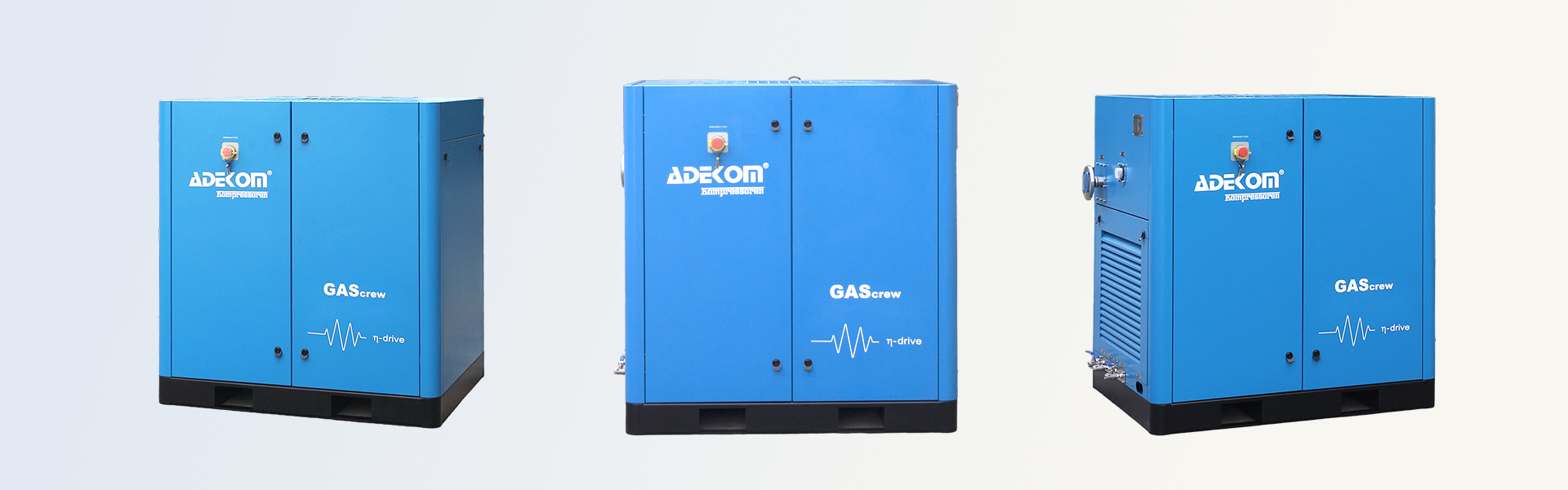
ADEKOM describes standard and explosion-proof process-gas screw packages and a dedicated biogas air-end. The selection begins with gas composition and suction conditions, rather than the power or air FAD of a familiar factory-air model.
Gas and contaminants
Provide composition, moisture and liquid carryover. Identify H₂S, CO₂, O₂ or other relevant constituents and their variation, so materials, seals and pretreatment can be selected.
Flow and inlet conditions
Give minimum, normal and maximum flow with its reference pressure and temperature. State suction absolute pressure, inlet temperature and required discharge pressure.
Site and integration
Define cooling and electrical utilities, hazardous-area classification, gas group, temperature class, destination requirements and plant shutdown interfaces.
From application brief to reviewable offer
Ask for the documents that settle the equipment boundary
Performance and utilities
Request a complete model or engineered datasheet with matched pressure/flow, reference conditions, power definition, cooling duty and electrical supply. Include normal, peak and part-load cases relevant to the process.
Drawing and interfaces
Agree package dimensions, weight, access, nozzle schedule, drains, controls and the division of work for treatment, receivers and external pipework. Identify manufacturer, legal seller and test location.
Acceptance and operation
Set factory test points, applicable inspection documents, air-quality or gas-package evidence, commissioning responsibilities, training and routine spare parts. Project standards must refer to the offered scope.
ADEKOM selection questions
Can KSP normal-volume capacity be compared directly with KDS FAD?
Confirm both reference conditions first. KSP lists Nm³/min and KDS lists FAD. Match the blow-cycle or plant demand to a consistent basis before assessing pressure losses, treatment and storage.
Is the KSP-II rating also valid for KSP-OF?
No. At the 6.0 Nm³/min and 40 barg point, the tables show different installed power and weight. Retain the exact suffix throughout the offer and drawing.
Does dry oil-free compression settle a food-process air specification?
Define particle, water and oil limits at the point of use and obtain evidence applying to the exact offered model and treatment boundary. Process-specific hygiene or sterile-air requirements need their own acceptance criteria.
Which gas information should accompany the first enquiry?
Gas composition and contaminants, reference flow range, suction absolute pressure and temperature, discharge requirement, utilities and hazardous-area/destination requirements. These inputs let the factory select a real duty point and package scope.